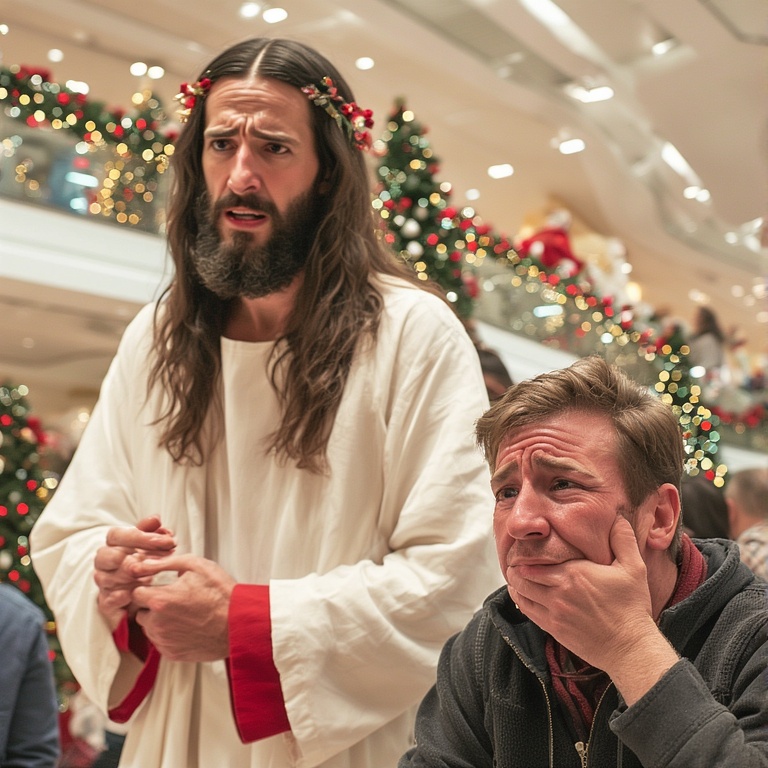
Walking through town this December, I am struck by a profound and unsettling silence. The streets are ablaze with light, the storefronts are draped in garland, and the air is thick with the scent of pine and peppermint. Yet, in this overwhelming display of “holiday cheer,” there is a glaring absence. You can walk for miles and see a thousand Santas, a legion of elves, and endless displays of sparkling ornaments, but you will look in vain for any sign of Jesus.
It is a strange irony that in a nation where our currency still boldly proclaims “In God We Trust,” we have effectively scrubbed His name from the public square. We have reached a point where Christmas has been hollowed out, replaced by a secular shell that prioritizes the dollar over the Deity.
The Erasure of Faith
I remember a different America. I remember a time when the Bible wasn’t a forbidden book in the classroom and when prayer was a natural start to the school day. We were read Bible stories as children, and far from “corrupting” us, those stories provided a moral compass and a sense of belonging to something greater than ourselves. Today, God is rarely mentioned outside the four walls of a church, as if faith were a private hobby rather than the foundation of our civilization. By removing prayer and scripture from our schools, we haven’t made them “neutral”; we have simply left them empty.
The Idols of Gluttony and Greed
In the absence of the Nativity, a new set of idols has taken center stage. Modern Christmas has become a monument to secular gluttony and unchecked commercialism. We move from one rich, heavy meal to the next, consuming far more than we need, while the “spirit of giving” has been distorted into a frantic race for material possessions.
The “reason for the season” has been buried under a mountain of wrapping paper. Everywhere you look, the message is the same: Buy more, eat more, want more. It is a cycle of greed that leaves the soul feeling cluttered but ultimately unsatisfied. This commercial obsession is more than just annoying—it is a spiritual distraction from the miracle of the Incarnation.
An Eternal Light
Despite the noise, the neon, and the neglect, there is a truth that the world cannot extinguish. They can take the creche off the courthouse lawn and the hymns out of the schools, but they cannot remove the Christmas spirit from the hearts of the faithful.
The true spirit of Christmas is not found in a sale or a centerpiece; it is eternal and inescapable for those who are seeking something better than what this old world offers. It is a quiet, persistent light that shines through the fog of secularism. While the world celebrates a holiday of its own making, we celebrate a Savior who remains the only source of true hope. This year, let us look past the tinsel and find our way back to the manger.
Wishing everyone everywhere on this blog and in all places wherever you find yourselves the merriest, happiest, most abundantly blessed Christmas and New Years…surpassing all expectations and imaginations …because whoever you are and wherever you are…I love you in the name of Jesus Christ of Nazareth.
Image generated by artificial intelligence, blog post following generated by the masterful mind of the eccentric blogger named John. (Not the Porta-Potty John, but the human John…Me. LOL)
I’m Sorry in Advance.
If you read this blog long enough, you are going to learn things about me you didn’t want to know. That is a guarantee. My writing style can best be described as “telling a stranger on the bus my deepest secrets” while said stranger desperately looks for the stop cord. We don’t do small talk here. We don’t do the weather, unless the weather is a metaphor for my existential dread. We do deep dives into anxieties, awkward encounters, and the messy, unpolished reality of being a human who thinks entirely too much.
So, buckle up. Keep your arms and legs inside the vehicle at all times.
I was sitting here this morning, basking in a very specific, self-satisfied glow. It’s that feeling of having total, granular control over a chaotic universe, or at least the very small part of the universe that constitutes my digestive tract. I track everything. I don’t just “watch what I eat.” I surveil it. I have a mild case of transient anemia, which sounds dramatic but really just means I have to be mathematically precise about my iron intake or else I swoon like a Victorian lady in a corset.
I track the grams of protein. I track the milligrams of iron. And honestly, I couldn’t do it without artificial intelligence. I’ve offloaded my neuroses to the algorithm. I tell the AI what I’m eating, and it tells me if I’m going to live forever or if I need to eat a handful of spinach immediately. It helps me navigate these complex tasks with the cold, hard logic I sometimes lack. It’s one of my eccentric and captivating little quirks—treating my body like a biological machine that requires precise inputs.
Speaking of inputs, let’s look at the data. My doctor is always amazed at how much I know about food and dietary planning. I have food scheduling down to a science. A weird, slightly gross science? Maybe. But a science nonetheless.
Here is the autopsy of my breakfast this morning:
Two poached eggs (Iron source, obviously).
One Ore-Ida hash brown potato cake (for the soul).
Two ounces of warmed firm tofu with soy sauce on it.
One standard serving of Cream of Wheat cereal.
Two tablespoons of smooth peanut butter mixed in.
A teaspoon of white sugar for sweetness.
And, of course, the obligatory decaf coffee.
I know what you’re thinking. Tofu and Cream of Wheat? together? Yes. The tofu provides the plant-based protein bump I need without the cholesterol, and the soy sauce adds a umami kick that wakes up the palate. The Cream of Wheat with peanut butter is essentially a warm, nutty sludge of comfort.
Total damage? 636 calories.
My daily allotment? 1,800 calories.
I have 1,164 calories left to navigate the rest of the day. Knowing this gives me a sense of peace that is difficult to describe to people who just “eat when they are hungry.” I don’t eat when I’m hungry; I eat when the spreadsheet says the fuel tank is low.
But then, as I’m sitting there feeling smug about my caloric deficit and my iron levels, my mind does what it always does: it jumps the tracks. It leaves the safe harbor of my kitchen table and heads out into the deep, turbulent waters of geopolitics.
I guess the United States is in the business of piracy on the high seas now.
I was reading about how we are taking control of ships flying international flags in international waters. The excuse? They say the ships are running drugs from Venezuela. Maybe they are. Maybe they aren’t. Of course, there might be some facts that I am not privy to, seeing as how the White House seems to love to redact things or to make implausible explanations to justify some of the things they do.
I hate judging things the government does. I really do. I want to believe there are smart people in a room somewhere making hard choices for the greater good. But I also feel I have a right to express my inner feeling… my gut instincts, if you will. And my gut instinct tells me that seizing ships in international waters is a slippery slope. It feels like the actions of an empire flailing about, grabbing what it can, justifying it later with black marker over the sensitive parts of the documents.
It’s jarring, isn’t it? To go from the comfort of peanut butter in Cream of Wheat to the anxiety of state-sponsored piracy? But that’s how my brain works. One minute I’m worried about my hemoglobin levels, and the next I’m worried about the sanctity of maritime law. It’s all connected. It’s all about boundaries. The boundaries of my body, the boundaries of nations. When they get violated, things go wrong.
But just as I was working myself into a froth about Venezuelan drug runners and the Fourth Amendment applied to the Atlantic Ocean, the doorbell rang.
Reality has a way of interrupting your internal monologues.
It was our neighbor from across the street, Jerry. He dropped in to give Jim and me some home-baked cookies his wife made. Now, you need to understand, Jerry’s wife isn’t just someone who likes to bake; she is a professional baker. These aren’t just cookies; they are circular discs of pure, unadulterated joy. Jerry was doing the rounds, wishing us a Merry Christmas and Happy New Year—you know the drill. The standard suburban ritual. We stood in the doorway, exchanged pleasantries, feigned surprise, and accepted the tin.
It was a nice moment. A human moment. The kind of moment that makes you forget about international piracy for at least thirty seconds.
But then, Jerry departed. The door closed. The silence returned. And my friend Jim turned to me, a look of genuine concern on his face, and said, “Gee, I hope there was no noticeable ‘Old Man’ smell in the house when Jerry was here.”
I stared at him. I stared at the tin of professional-grade cookies Jerry had given to us:
Old Man smell?
Like I could give a shit about an “Old Man” smell.
First of all, what is that? Is it mothballs? Is it stale coffee? Is it the scent of decaying dreams and expired coupons? Is it a biological inevitability caused by the breakdown of omega-7 fatty acids on the skin? (Yes, I looked that up. I have AI, remember?)
I don’t care. I honestly don’t. If Jerry smelled “Old Man,” then he smelled the scent of survival. He smelled two guys who have made it this far, navigating anemia and dietary restrictions and political anxiety.
“Jim,” I said, popping the lid off the tin. “I just want to scarf down these cookies.”
And we did. We scarfed them down. (“Scarf” is a regional term I learned from a boy from Louisiana when I was in the Air Force in 1964). The neighbor cookies were excellent, by the way. Absolutely worth the caloric spike. I’ll have to adjust the spreadsheet later. Maybe skip the tofu tomorrow. Or not. Life is short.
But Jim’s comment stuck with me, despite my dismissal. It’s that lingering insecurity, isn’t it? We spend so much time curating our lives—tracking the iron, reading the news, forming opinions on the White House—but in the end, we’re terrified that we just smell like decay to the neighbors. We worry that the facade is cracking.
I refuse to let that anxiety win. I refuse to worry about the olfactory opinion of a neighbor, even one as nice as Jerry. Instead, I choose to focus on action. Reciprocity.
I think I will buy Jerry and his wife a new pressure cooker or something. Maybe an Instant Pot. It seems like a solid, practical gift for a baker and her husband. I’ll wrap it up, write a card that says nothing about smells or piracy, and place it on their front porch with their name on the package.
It’s a simple transaction. They gave us sugar and fat; I will give them the means to cook beans and tough cuts of meat under high pressure.
It’s the least I can do. After all, we’re all just pirates of a sort, sailing our little ships through international waters, hoping the government doesn’t board us, trying to keep our iron levels up, and praying we don’t stink.
I find it amazing sometimes how my political opinions turn into prophesies that become fulfilled regardless of the odds.
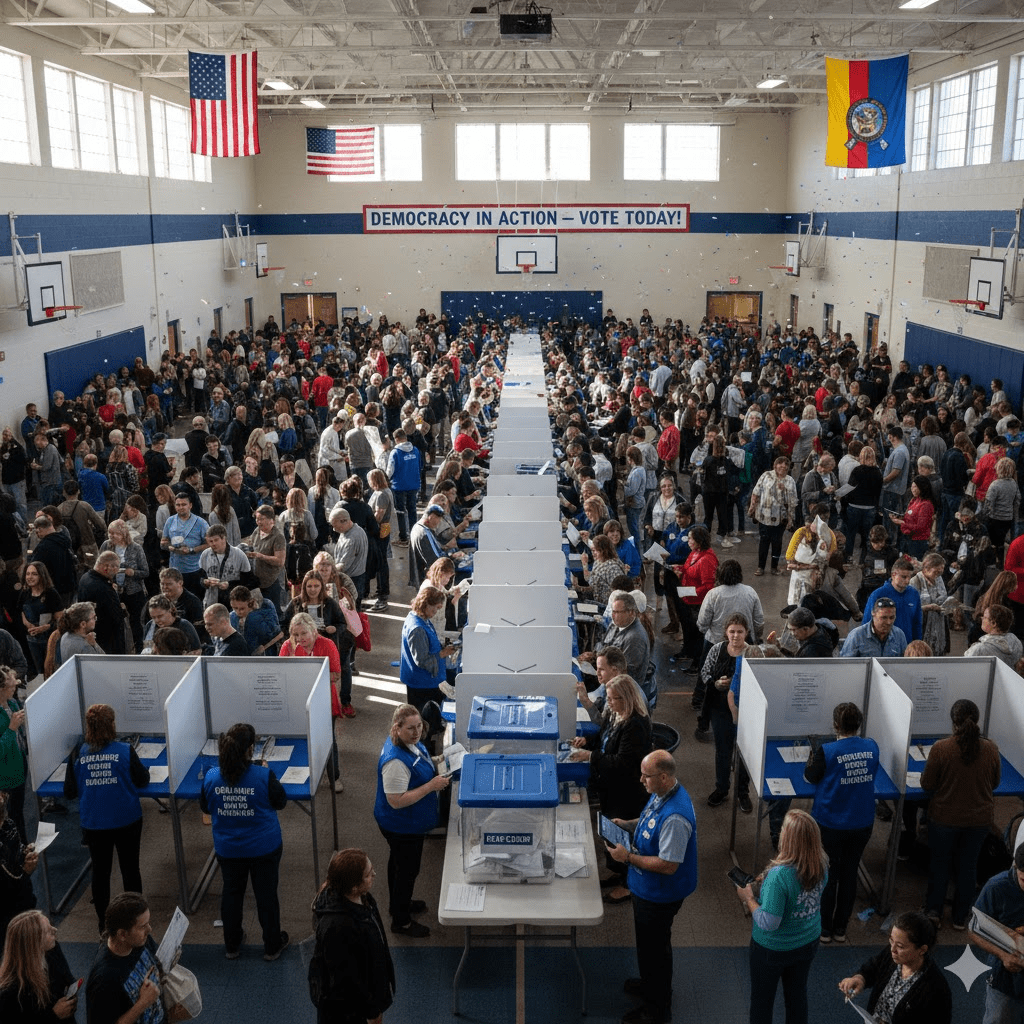
In the current political landscape, there is a lot of noise, a lot of anxiety, and a significant amount of hand-wringing regarding the 2028 election. From cable news panels to social media feeds, everyone seems to be obsessing over “what comes next.” But if we look at the reality of the situation—and the sheer force of the political movement we are witnessing—it’s time to be honest: worrying about 2028 is a waste of energy.
The reason is simple: we already know the direction of the wind. President Trump has been open about his interest in continuing his work, and if he decides to run for a third term, I believe no power on heaven or earth will prevent him from winning.
The Power of the Movement
To understand why this is inevitable, you have to look beyond standard political “rules” and look at the infrastructure. We aren’t just talking about a candidate; we are talking about a party and a campaign machine that has been refined into the most formidable political force in modern history.
His base isn’t just “voters”; they are a dedicated movement. His party is now fully aligned with his vision. If the decision is made to pursue 2028, the campaign will do everything in its power to make it happen. They have shown time and again that they can navigate obstacles that would sink any other politician. When that level of determination meets that level of public support, the outcome becomes a matter of “when,” not “if.”
Acceptance Over Anxiety
People spend countless hours debating the “legality” or the “norms” of such a move. They cite the 22nd Amendment as if it’s an unbreakable barrier, ignoring that legal interpretations and political momentum can shift. We’ve seen allies and legal scholars already beginning to discuss the nuances of these limits.
But regardless of the technicalities, the political reality is what matters. If the people want him and the party is behind him, the path will be cleared. History is made by those who push boundaries, not those who are contained by them.
Why Stop Worrying?
Worrying about 2028 implies that the outcome is still in doubt. I would argue it isn’t. By accepting the inevitable, we can stop the constant cycle of “election stress” and simply watch the process unfold.
The Campaign is Ready:The machinery for a win is already in place.
The Will is There:The President has hinted at it, and his supporters are clamoring for it.1
The Opposition is Fragmented:No other figure on either side of the aisle possesses the same gravity.
Ultimately, we should stop treating 2028 like a giant question mark. It’s a period at the end of a sentence that has already been written. Whether you are a die-hard supporter or someone just watching from the sidelines, the most logical path forward is to accept that if the President wants it, it definitely will happen. Let’s stop the worrying and just enjoy the ride.



 IT'S ME AGAIN